What Does “Blacklisted” Actually Mean in South Africa?
In South Africa, the term “blacklisted” is informal but widely used. It refers to a person who has one or more negative listings on their credit profile held by the major credit bureaus: TransUnion, Experian, XDS, and Compuscan.
These negative listings can include:
- Default — you missed payments and the account was handed over
- Judgment — a court ordered you to repay a debt
- Adverse listing — your account was flagged as high risk
- Debt review flag — you are currently under formal debt counselling
- Administration order — a magistrate’s court is managing your debt
The good news: your credit record is not permanent. Most negative listings fall off after a set period, and paid defaults are removed one year after settlement. Judgments are removed after five years or when paid in full.
You are legally entitled to one free credit report per year from each bureau. Check yours before applying for any loan. Visit transunion.co.za, experian.co.za, or use the free ClearScore app to understand exactly where you stand.
Can You Get a Loan If You Are Blacklisted in South Africa?
The short answer is yes — in some cases. However, the reality is more nuanced than most lenders advertise. Under the National Credit Act (NCA), all registered lenders are required to perform an affordability assessment before approving any credit. This means even lenders that market to blacklisted applicants will still check your income and existing debt obligations.
The key distinction lenders make is between credit history and current affordability:
- Traditional banks focus heavily on your credit score and history
- Short-term and alternative lenders focus more on your current income and ability to repay
If you are currently under debt review, sequestration, liquidation, or administration, no registered lender can legally approve you for a new loan. Any lender that does so is operating outside the law — this protects you, not punishes you.
Your Real Loan Options as a Blacklisted Person in 2026
Here is an honest breakdown of every option available to you, from most affordable to most expensive:
1. Registered Short-Term Lenders (Microloans)
Companies like Boodle, Lime24, Wonga, and FinchoicePay offer loans to applicants with poor credit histories. These are regulated by the NCR and operate within the law. However, interest rates are at or near the legal maximum of 5% per month, making them extremely expensive for anything beyond a very short repayment period.
Typical amounts: R500 to R8,000. Repayment terms: 1 to 6 months.
2. Debt Consolidation Loans
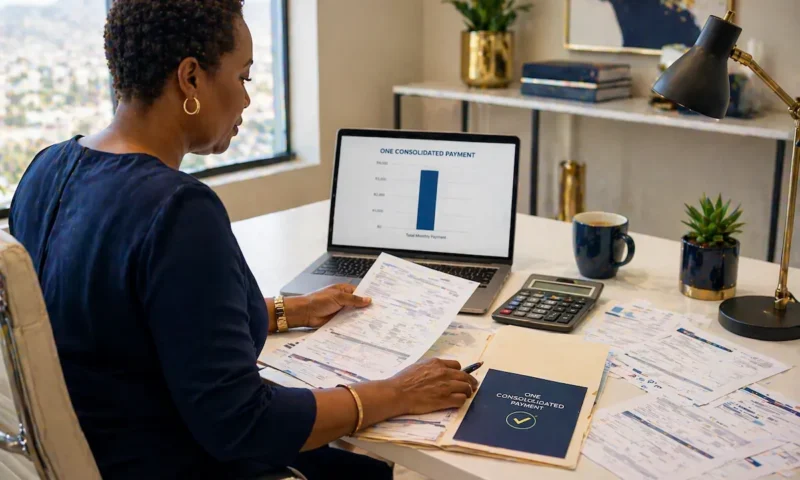
If you have multiple debts, a consolidation loan combines them into a single monthly payment — often at a lower interest rate. This is only available if your affordability score meets the lender’s requirements. It is a smarter option than multiple small loans, but you must ensure the consolidation rate is genuinely lower than your current debts.
3. Formal Debt Review (Debt Counselling)
This is not a loan — but it is often the best option for people with serious debt problems. Under Section 86 of the NCA, a registered debt counsellor can reduce your interest rates to 0–5%, consolidate all your payments into one affordable amount, and protect your assets from repossession. Once completed, your debt review flag is removed and your credit record begins recovering.
4. Employer-Based Salary Advances
Some employers offer salary advances or have arrangements with registered credit providers. These typically have lower fees than microlenders. Speak to your HR department before approaching external lenders.
5. Credit Unions and Stokvels
Informal but community-based savings and lending pools (stokvels) remain widely used in South Africa. There are also registered credit unions and cooperative financial institutions that may offer credit on more favourable terms to their members.
Blacklisted Loan Options at a Glance
| Option | Available if Blacklisted? | Typical APR | Loan Amount | Best For |
|---|---|---|---|---|
| Traditional bank loan | ✗ Usually No | 13–22% | R5,000+ | Clean credit record |
| NCR-registered microlender | ✓ Yes | Up to 60% | R500–R8,000 | Urgent short-term cash |
| Debt consolidation loan | ~ Conditional | 18–35% | R5,000–R150,000 | Multiple debts, stable income |
| Debt review / counselling | ✓ Yes (not a loan) | 0–5% (restructured) | All existing debt | Severe over-indebtedness |
| Employer salary advance | ✓ Often Yes | Low / zero | Portion of salary | Employed, short-term need |
| Stokvel / credit union | ✓ Yes (member) | Varies | Varies | Community members |
How to Apply for a Blacklisted Loan: Step-by-Step
Visit TransUnion, Experian, or ClearScore. Identify exactly which entries are negative — defaults, judgments, or adverse listings. Dispute any errors immediately. Under the NCA, bureaus must investigate within 20 business days.
Every legal credit provider in South Africa must be registered with the National Credit Regulator. Check at ncr.org.za or call 0860 627 627. If a lender cannot provide their NCR registration number, walk away.
Most lenders require: a valid South African ID, your most recent 3 months’ payslips or bank statements, and proof of residence. Some digital lenders use secure bank verification instead of documents.
Calculate the full repayment amount before signing. A R5,000 loan at 5% per month over 6 months costs approximately R7,500+ to repay in full. Always ask for the APR and total repayable amount.
Under the NCA, you have the right to a full pre-agreement statement before signing anything. Read it carefully. Once approved, funds are typically disbursed within 24–48 hours by registered lenders.
Blacklisted Loan Scams: What to Watch Out For in 2026
South Africa has a serious problem with predatory lenders and outright scammers targeting people who are blacklisted and desperate. Knowing the warning signs can save you thousands of rands — and real harm.
🚨 Red Flags — Avoid These Immediately
- Upfront fee required — No legitimate lender charges a fee before disbursing funds. This is the most common scam.
- “Guaranteed approval” with no checks — Every legal lender must assess affordability. Guaranteed approval is illegal under the NCA.
- Asking for your SASSA card or bank PIN — This is illegal. No lender may take your card as security.
- No NCR registration number provided — Operating without NCR registration is a criminal offence.
- WhatsApp-only lenders — Many fraudulent “lenders” operate exclusively on WhatsApp with no physical address.
- Interest rates above 5% per month — The NCR sets a legal maximum. Anything above it is illegal.
If you believe you have been approached by an illegal lender, report them to the NCR at 0860 627 627 or contact the SAPS at 10111.
How to Rebuild Your Credit Record After Being Blacklisted
Getting a loan is a short-term solution. Rebuilding your credit record is the long-term goal. Here is how to do it systematically:
- Settle outstanding defaults — Paid defaults are removed from your record one year after payment. Negotiate directly with creditors; many accept 40–60% of the original amount as a settlement.
- Dispute incorrect listings — Errors are more common than you think. Duplicates, already-paid debts, and identity fraud cases are all legitimate grounds for dispute.
- Use a credit-builder product — Some banks and fintech companies offer small credit facilities specifically designed to rebuild your score through consistent repayment.
- Never miss a payment again — Even a single on-time repayment on a new account begins to improve your profile.
- Keep your credit utilisation low — Don’t use more than 30% of any available credit limit.
- Monitor your profile monthly — Use ClearScore or your bureau’s free annual report to track progress.
If your debts are genuinely unmanageable, formal debt review under Section 86 of the NCA is the most powerful tool available to you. It reduces interest rates to 0–5%, protects your assets from repossession, and once completed, clears your credit flag entirely. Contact a registered debt counsellor via the NCR or call 0860 627 627 for a free assessment.
Key South African Laws That Protect You as a Borrower
South Africa has some of the most comprehensive consumer credit protections on the continent. Understanding your rights makes you a safer borrower:
| Legislation | What It Does For You |
|---|---|
| National Credit Act (NCA) | Governs all credit in SA. Requires affordability assessments, caps interest rates, mandates pre-agreement statements, and regulates debt counselling. |
| National Credit Regulator (NCR) | Registers and monitors all credit providers. You can report illegal lenders and verify any lender’s legitimacy here. |
| Consumer Protection Act (CPA) | Protects against unfair, deceptive, or misleading credit marketing. You have the right to honest and transparent terms. |
| Credit Bureaus Regulations | Entitles you to one free credit report per year from each bureau. Incorrect listings must be investigated within 20 business days. |
Frequently Asked Questions
Ready to Explore Your Options?
Compare NCR-registered lenders, check your eligibility, and find the right solution for your financial situation — without risk.
Final Thoughts
Being blacklisted in South Africa is a serious financial challenge — but it is not a dead end. The most important steps are understanding exactly what is on your credit record, verifying that any lender you approach is NCR-registered, and honestly assessing whether a new loan will help or worsen your situation.
For many people in serious debt, formal debt review is a more sustainable solution than taking on more high-interest credit. If you are unsure which path is right for you, contact the NCR Consumer Line on 0860 627 627 for free, impartial guidance.
Borrow only what you need, compare the total cost — not just the monthly repayment — and always verify your lender’s NCR registration before signing anything.