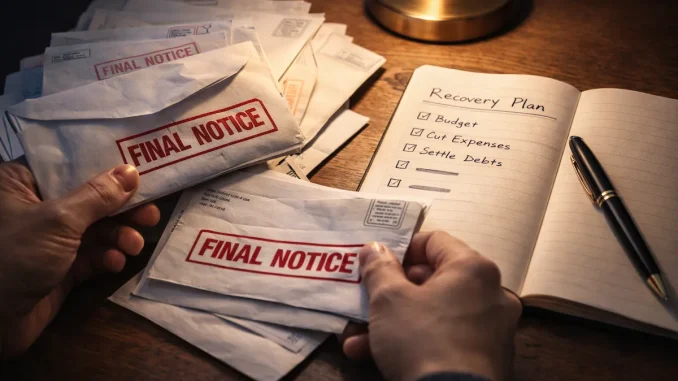
Financial hiccups happen to the best of us. Whether it’s a sudden job loss, a medical emergency, or simply forgetting a due date in the chaos of daily life, missing a credit obligation can feel like the end of the world. In the high-speed financial ecosystem of 2026, where algorithms react to data instantly, the anxiety of “what happens next?” is real. However, credit problems are not a reflection of your character; they are simply data points that trigger specific, predictable consequences.
The moment things go wrong—whether it is a single late fee or a looming default—a mechanical process begins. Lenders have strict protocols for how they handle these situations, from reporting the delinquency to the bureaus to selling the debt to third-party collectors. The good news is that this process is highly regulated, and understanding it is your best defense against long-term damage.
In this comprehensive guide, we will demystify the domino effect of credit problems. We will start by examining the immediate impact of what happens after a missed payment and escalate to the more serious territory of defaults and collections explained. We will also answer the burning question of how long negative information stays on your report and, perhaps most importantly, provide a roadmap for how to recover from credit problems over time. No matter where you are in this cycle, there is always a path forward.
The Domino Effect of Financial Distress
Credit problems rarely happen all at once; they unfold in a specific sequence. Understanding this timeline is crucial because the earlier you intervene, the less damage you will suffer. In 2026, automated systems trigger these stages with precision, leaving little room for error if you don’t act quickly.
The cycle typically begins with a single missed due date. If left unresolved, it escalates to late fees, then to credit bureau reporting, and finally to the severe status of “default.” Each stage carries its own set of consequences for your score and your legal standing with the lender.
The First Warning Sign: Missed Payments
The most common credit problem is simply missing a payment. Whether it’s due to a technical glitch or a lack of funds, the clock starts ticking the moment the due date passes. For the first 29 days, the damage is usually contained to late fees and internal calls from the bank. However, once you cross the 30-day mark, the event is reported to the credit bureaus.
This single report can drop a high credit score by over 100 points overnight. The severity depends on how recent and how frequent the delinquency is. To understand the exact mechanics of this initial phase and how to mitigate the damage immediately, read our detailed guide: What Happens After a Missed Payment?.
When a Problem Becomes a Crisis: Defaults and Collections
If a missed payment is a warning shot, a default is the cannon fire. A “default” occurs when you have failed to pay a debt for an extended period (usually 90 to 180 days), and the lender decides you are unlikely to pay at all. At this point, the original creditor may close your account, write off the debt as a loss (a “charge-off”), and sell it to a third-party collection agency.
This transition changes the nature of your problem significantly. You are no longer dealing with a bank’s customer service department; you are dealing with aggressive debt collectors who have legal tools to pursue payment. The impact on your credit report is severe and long-lasting. We break down this complex and often intimidating process in Defaults and Collections Explained.
The Long Shadow of Negative Information
One of the biggest fears consumers have is that a financial mistake will haunt them forever. Fortunately, the credit system is designed to be forgiving—eventually. The Fair Credit Reporting Act (FCRA) mandates that negative information cannot stay on your report indefinitely. Most negative items, including late payments and collections, have a strict expiration date.
However, the clock ticks differently for different types of problems. A bankruptcy lingers longer than a late payment, and a hard inquiry disappears relatively quickly. Knowing these timeframes helps you plan your financial future with realistic expectations. Learn the specific expiration dates for every type of negative mark in How Long Does Negative Credit Information Stay?.
The Road to Redemption
The most important takeaway from this guide is that credit is renewable. No matter how deep the hole is, you can climb out of it. Recovery is not about magic tricks or “credit repair” scams; it is about consistent, positive behavior over time. In 2026, tools like “secured credit cards” and “credit builder loans” are more accessible than ever, allowing you to rebuild your reputation brick by brick.
While the scars of a default may remain for years, their impact on your score diminishes as you add new, positive data to your file. If you are ready to start the rebuilding process, our step-by-step strategy guide will show you the way: Can You Recover from Credit Problems Over Time?.
Facing the Storm with a Strategy
Credit problems are stressful, but they are rarely fatal to your long-term financial health. The worst thing you can do when facing a missed payment or a collection call is to ignore it. In 2026, the speed of information means that burying your head in the sand only allows the problem to grow faster. Instead, by facing the situation head-on—understanding the timelines, knowing your rights, and executing a recovery plan—you regain control.
Remember, your credit score is a snapshot of the present, not a life sentence. Every positive step you take today, no matter how small, begins to push the negative history into the background. Use the resources in our supporting guides to tackle specific issues like collections or missed payments. The path to recovery is open; you just have to take the first step.
Frequently Asked Questions About Credit Problems
Will paying off a collection account remove it from my report?
Generally, no. Paying a collection account does not delete the history of the collection itself. It simply updates the status to “Paid in Full,” which is better than “Unpaid” but still leaves the negative mark on your report for seven years.
How many points will my score drop after one missed payment?
It depends on your starting score. If you have a high score (750+), a single 30-day late payment can cause a drop of over 100 points. If your score is already low, the drop may be less severe, but it is still damaging.
Can I go to jail for not paying my credit card debt?
No. Unpaid consumer debt (credit cards, personal loans, medical bills) is a civil matter, not a criminal one. You cannot be arrested or jailed for failing to pay these debts, though you can be sued in civil court for a judgment.
What does “Charge-Off” mean?
A “charge-off” means the original lender has given up on collecting the debt from you (usually after 180 days of non-payment) and has written it off as a loss on their taxes. However, you still owe the money, and the debt is often sold to a collection agency.
Can credit repair companies fix my bad credit?
Credit repair companies cannot remove accurate information from your report. They can only help you dispute errors or outdated information. If a negative item is accurate and within the legal time limit, no company can legally remove it.
Be the first to comment