When you are staring at a credit score that has plummeted due to missed payments, collections, or even bankruptcy, it is easy to feel like you have been permanently branded. You might believe that you will never qualify for a mortgage, a car loan, or a decent credit card again. But here is the truth about the financial system in 2026: credit is not a tattoo; it is a snapshot.
Your credit report is a living, breathing document that evolves with every new piece of data. While negative marks from the past pull your score down, every positive action you take today pushes it back up. The path to recovery is well-worn and accessible to everyone. Whether you are starting from zero or rebuilding from a major crash, the mathematical principles of credit scoring work the same way: time plus positive behavior equals recovery.
In this guide, we will move beyond the “doom and gloom” of credit problems and focus entirely on the solution. We will explore proven tools like secured credit cards and credit builder loans that act as stepping stones back to financial health. If you need a refresher on the issues that brought you here, review our foundational guide: Credit Problems Explained: What Happens When Things Go Wrong.
The Toolkit for Repairing Broken Credit
Rebuilding your credit isn’t about erasing the past; it’s about overwhelming the negative data with a flood of new, positive data. Think of your credit report like a scale. If the “negative” side is heavy with missed payments, you need to pile so much “positive” weight on the other side that the scale tips back in your favor. Here are the most effective tools to do just that in 2026.
1. Secured Credit Cards: The Foundation
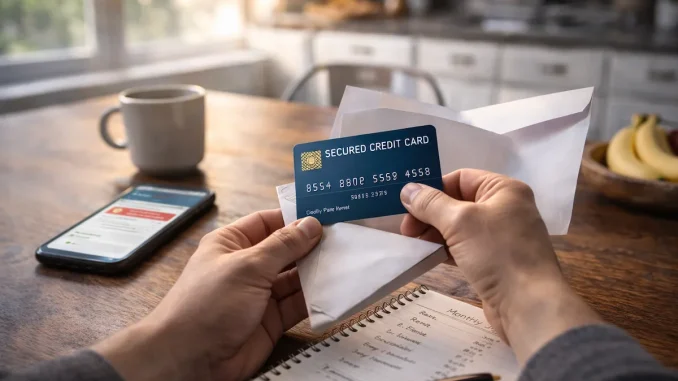
If traditional banks are rejecting your applications, a secured credit card is your best friend. Unlike a regular card, a secured card requires a cash deposit upfront (usually $200 to $500). This deposit acts as your credit limit and protects the bank if you don’t pay.
Because the bank takes zero risk, almost anyone can get approved. You use the card for small purchases (like gas or groceries) and pay it off in full every month. The issuer reports these on-time payments to the credit bureaus just like a regular credit card. over time, this positive history dilutes the impact of past mistakes. For more on how this fits into the broader recovery timeline, see our pillar guide: Credit Problems Explained: What Happens When Things Go Wrong.
2. Credit Builder Loans: Forced Savings
Another powerful tool is the credit builder loan, offered by many credit unions and online lenders. It works in reverse of a traditional loan: you don’t get the money upfront. Instead, you make monthly payments into a locked savings account. Once the “loan” is paid off, the bank releases the funds to you.
During this process, every payment is reported to the bureaus as an installment loan payment. This adds a new “mix of credit” to your profile and builds a consistent payment history without the temptation of spending money you don’t have.
3. Becoming an Authorized User
If you have a family member or close friend with excellent credit, you can ask them to add you as an authorized user on one of their oldest credit cards. You don’t even need to use the card or have access to it. The entire history of that account—its age, perfect payment record, and low utilization—will be “copied and pasted” onto your credit report.
This method, often called “piggybacking,” can give your score an instant boost, sometimes by 20-30 points or more. However, it requires a high level of trust from the primary account holder.
The Magic of Time and Patience
While these tools are effective, the most crucial ingredient in credit repair is simply time. As we discussed in our guide on recovery, negative items have less impact on your score as they age. A bankruptcy from two years ago hurts much less than a bankruptcy from last month.
By combining these positive rebuilding tools with the natural healing power of time, you create a “pincer movement” on your bad credit. The old negatives fade into the background, while the new positives take center stage. Within 12 to 24 months of consistent effort, most consumers see a significant improvement in their scores, moving from “subprime” to “prime” territory.
Your Financial Comeback Starts Today
Recovering from serious credit problems is a marathon, not a sprint, but it is a race you can absolutely finish. The financial system in 2026 is built on data, and by feeding that system new, positive information month after month, you can bury the mistakes of the past. The tools we’ve discussed—secured cards, credit builder loans, and authorized user status—are not magic tricks; they are proven levers that mechanically lift your score over time.
The hardest part is often just getting started and having the patience to let the process work. Do not get discouraged if your score doesn’t jump 100 points in the first month. Consistency is everything. Keep making those small, on-time payments, keep your balances low, and trust that time is on your side. Before you know it, you will have moved from a “high-risk” borrower to a prime candidate for the financial products you deserve. For a complete overview of the journey from crisis to recovery, always refer back to our central guide: Credit Problems Explained: What Happens When Things Go Wrong.
Frequently Asked Questions About Rebuilding Credit
How long does it realistically take to rebuild a bad credit score?
While everyone’s situation is different, most people see significant improvement within 12 to 18 months of consistent, positive behavior. Moving from a “poor” score (under 580) to a “fair” score (620-660) can often be achieved in about a year using tools like secured cards.
Will getting denied for a new card hurt my score even more?
Yes. Every application triggers a “hard inquiry,” which can drop your score by a few points. This is why you should avoid applying for prime credit cards right away and focus on secured cards or products designed for rebuilding, where approval odds are much higher.
Do I get my deposit back from a secured credit card?
Yes. The deposit is collateral, not a fee. You get it back when you close the account in good standing or when the lender graduates you to an unsecured card after a period of responsible use (usually 8-12 months).
Can paying off old collections boost my score immediately?
It depends on the scoring model. Older FICO models may not see a score increase just because a collection is paid. However, newer models like FICO 9 and VantageScore 3.0/4.0 tend to penalize paid collections less. Regardless of the immediate score jump, paying them prevents lawsuits and looks better to future lenders.
Is there any “quick fix” for bad credit?
No. Any company promising to raise your score by 100 points in 30 days is likely a scam. Legitimate credit rebuilding requires time for new positive data to outweigh old negative data. There are no legal shortcuts.
Be the first to comment