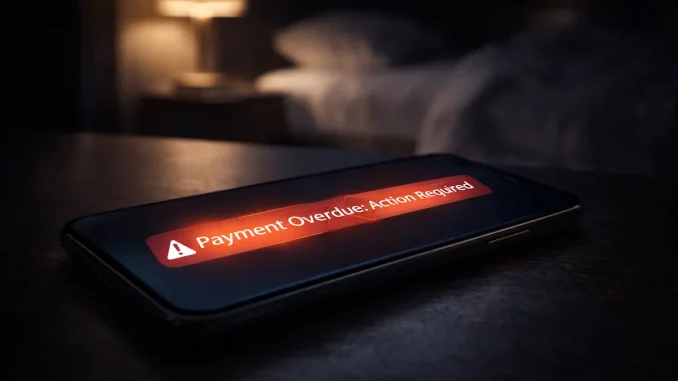
The moment you realize you forgot to pay a credit card bill or a loan installment, a wave of panic usually sets in. Questions race through your mind: “Did my credit score just crash?” “Will I be denied my next loan?” “Is there a permanent mark on my record?” In the high-stakes world of 2026 finance, where data is tracked instantly, these fears are understandable. However, not every missed deadline is a catastrophe.
There is a massive difference between being one day late and being thirty days late. While banks are quick to charge late fees, the credit reporting system operates on a specific timeline that gives you a brief window of opportunity to fix your mistake before it becomes public knowledge. Understanding exactly where you stand in this timeline is the key to preventing a minor slip-up from becoming a major financial scar.
In this guide, we will break down the day-by-day consequences of a missed payment, from the initial late fee to the dreaded “30-day mark” that triggers a report to the bureaus. For a broader overview of how these events fit into the larger picture of financial health, be sure to read our main guide: Credit Problems Explained: What Happens When Things Go Wrong.
Days 1 to 29: The “Safe” Zone (With Consequences)
If you miss your due date by a few days or even a couple of weeks, you are technically in the “delinquency” phase with your lender, but you are not yet “late” in the eyes of the credit bureaus. This is a critical distinction. Most lenders do not report a missed payment to Equifax, Experian, or TransUnion until it is a full 30 days past due.
However, this period is not without cost. You will almost certainly be hit with a late fee, which can range from $29 to $41 depending on your balance and history. Additionally, if you were enjoying a promotional 0% interest rate, the lender may revoke it immediately. The best move here is to pay the minimum due immediately to stop the clock. While your wallet might take a small hit from the fee, your credit score remains safe—for now.
Day 30: The Cliff Edge
The moment the clock strikes midnight on the 30th day past your due date, the situation changes drastically. By law and industry standard, lenders can now report the account as “30 Days Late” to the credit bureaus. This single negative mark is devastating to a clean credit report.
For a consumer with a high credit score (750+), a 30-day late payment can cause an immediate drop of 60 to 110 points. It is a harsh penalty that reflects the perceived increase in risk. Once this mark is on your report, it stays there for seven years, although its impact on your score diminishes over time. To understand the broader context of how this fits into long-term credit health, review our pillar guide on Credit Problems Explained.
The Hidden Trap: Penalty APR
Beyond the score drop and the late fees, there is a third consequence that often catches borrowers by surprise: the Penalty APR. When you are more than 60 days late, many credit card agreements allow the issuer to increase your interest rate to the highest legal limit—often 29.99% or higher.
This penalty rate doesn’t just apply to new purchases; in many cases, it applies to your entire existing balance. This can double or triple your monthly interest charges, making it significantly harder to pay down the principal. If you trigger this clause, getting your rate back down to normal usually requires making six consecutive on-time payments to prove your reliability again.
Day 60, 90, and Beyond
If the payment remains unpaid, the damage compounds. At 60 days late, a second, more severe mark is added to your report. At 90 days, the lender may cut off your credit limit entirely. By 120 to 180 days, the debt is typically “charged off” and sold to a collections agency, a process that opens a new chapter of financial difficulty.
Acting Fast Saves Your Score
The difference between a minor annoyance and a major credit disaster often comes down to a matter of hours or days. If you realize you have missed a payment, do not wait for the next statement or assume the problem will resolve itself. In the digital age of 2026, acting within the 29-day window is your golden opportunity to pay the late fee and avoid any permanent damage to your credit report.
However, if you have already crossed the 30-day threshold, the strategy shifts from prevention to damage control. The key is to bring the account current as soon as possible to stop further delinquency marks (60, 90 days) from piling up. Recovering from a missed payment takes time and consistent behavior, but it is entirely possible. For a complete roadmap on handling these situations and what comes next, refer to our comprehensive guide: Credit Problems Explained: What Happens When Things Go Wrong.
Frequently Asked Questions About Missed Payments
Does a payment 1 day late hurt my credit score?
No. A payment that is only a few days late will trigger a late fee from your bank, but it will not be reported to the credit bureaus. Lenders generally cannot report a late payment until it is a full 30 days past the due date.
Can I get a late fee waived?
Yes, often. If you have a good history with the lender and this is your first mistake, you can call customer service and ask for a “courtesy waiver.” Many banks will remove the fee to keep a good customer happy.
What if I make a partial payment?
Making a partial payment (less than the minimum due) usually does not stop the clock. You are still considered “past due” on the remaining amount. However, it shows good faith and might prevent the account from being sent to collections later.
Will a missed payment stay on my report forever?
No. A late payment remains on your credit report for seven years from the date of the delinquency. However, its impact on your score fades over time. A late payment from five years ago hurts much less than one from last month.
Does autopay prevent all missed payments?
Autopay is a great tool, but it isn’t foolproof. If your bank account doesn’t have enough funds, the payment will bounce, and you could be hit with both a “returned payment fee” and a late fee. Always monitor your accounts.
Be the first to comment