The truth is complex. While major banks (RBC, TD, etc.) typically require standard employment income, many alternative lenders in Canada do accept government benefits as a valid source of income. Receiving CCB, CPP, or disability support does not automatically disqualify you.
However, borrowing on a limited income carries higher risks. This guide explains which loan options are safe, how approval works for benefit recipients, and the alternatives you should explore first.
What Counts as “Income” for Canadian Lenders?
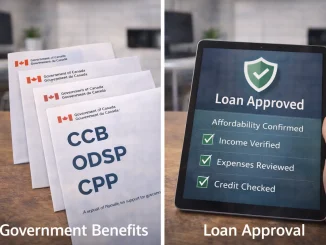
In the eyes of alternative lenders, “Income” isn’t just a paycheque from a job. It is any consistent deposit into your bank account. Common accepted benefits include:
- Canada Child Benefit (CCB): Widely accepted by lenders as it is stable and long-term.
- Canada Pension Plan (CPP) & OAS: Accepted as reliable fixed income.
- Disability Support (ODSP / AISH / PWD): Accepted, though lenders must ensure the loan payment doesn’t leave you below the poverty line.
- Employment Insurance (EI): Less commonly accepted for long-term loans because it has a fixed end date.
The Catch: Lenders look for consistency. If your benefits fluctuate wildly, approval becomes difficult.
Is It Legal to Get a Loan on Benefits?
Yes. There is no law in Canada preventing you from borrowing money if your primary income comes from the government.
However, lenders must follow the Federal Criminal Code regarding interest rates (maximum 35% APR for most loans) and provincial consumer protection laws.
Warning: Be very careful of lenders who try to “garnish” your benefits directly. In many provinces, certain government benefits cannot legally be garnished by creditors, but predatory lenders may try to set up pre-authorized debits that drain your account the moment the money lands.
Realistic Loan Options available
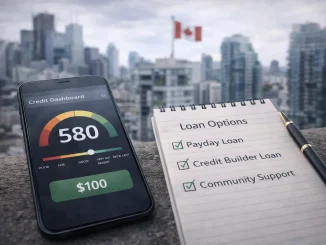
If you have a low credit score and low income, your options are limited to specific “B-Lenders”:
1. Installment Loans
Lenders like Fairstone, easyfinancial, or Money Mart offer installment loans. You borrow a lump sum (e.g., $1,000) and repay it over 12-24 months.
Pros: Predictable payments; reports to Equifax (builds credit).
Cons: High interest rates (29% – 46%).
2. Payday Loans
Regulated provincially. You borrow up to $1,500 and repay it on your next “benefit day.”
Pros: Very easy approval; no hard credit check.
Cons: Extremely expensive. In Ontario, $15 per $100 borrowed equals ~390% APR.
3. Secured Loans
If you own a car, some lenders will overlook your income level if you use the vehicle as collateral. This is risky: if you miss payments, you lose your car.
Unsure if you qualify? Read our guide on approval rules and myths for loans on benefits.
The “Affordability” Test
Since your income is fixed, lenders focus heavily on Affordability. They calculate your Debt-to-Income (DTI) ratio.
Total Monthly Benefits – (Rent + Food + Utilities + Existing Debt) = Surplus.
If your surplus is $0 or negative, a legal lender cannot approve you.
Want to boost your odds? Check our tips on how to improve loan approval chances on a low income.
The Risks: The “Squeeze” Effect
Borrowing on a low income is dangerous because you have no “wiggle room.”
- The Benefit Cycle: If you borrow against your CCB, you are spending next month’s child benefit today. When next month comes, you will be short, leading to a need to borrow again. This is the “Debt Cycle.”
- NSF Fees: If a lender tries to withdraw payment and your account is empty, your bank charges you $45. For someone on a fixed income, this is devastating.
Safer Alternatives for Low-Income Canadians
Before you take a loan, check if you qualify for non-repayable help:
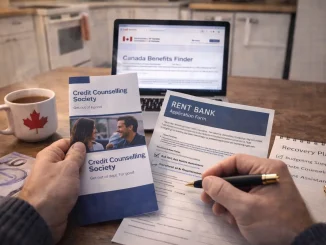
1. Rent Banks
In BC, Ontario, and Manitoba, Rent Banks offer interest-free loans or grants to help pay rent or utilities.
2. Provincial Emergency Assistance
Programs like Ontario Works Discretionary Benefits or Alberta Emergency Needs Allowance can cover one-time emergencies (dental, glasses, moving costs).
3. Food Banks & Community Support
Using a food bank saves you cash at the grocery store, freeing up money for other bills without borrowing.
Explore full details in our guide to alternatives to loans for low-income Canadians.
Who Is This Guide For?
This guide is for Canadians who:
- Receive government benefits (ODSP, AISH, CCB, CPP) as their main income.
- Are working part-time or on minimum wage.
- Want to understand which lenders are safe and which are predatory.
Frequently Asked Questions
Do lenders accept Canada Child Benefit (CCB) as income?
Yes. Most alternative lenders (like Fairstone or easyfinancial) accept CCB as a valid, stable source of income because it is a reliable government deposit.
Can I get a loan if I am on ODSP or AISH?
Yes. Disability income is considered valid income. However, lenders must ensure that the loan repayment does not cause you undue hardship or leave you without money for essentials.
What is the maximum interest rate in Canada?
For most loans, the criminal rate of interest is effectively capped around 35% APR (Annual Percentage Rate) by recent federal changes. However, Payday Loans are exempt and can have much higher effective rates (e.g., 390%+).
Are there loans for low income with no credit check?
Yes, some lenders offer ‘no credit check’ loans based purely on your bank statement (IBV). Be careful, as these often come with the highest fees and interest rates.