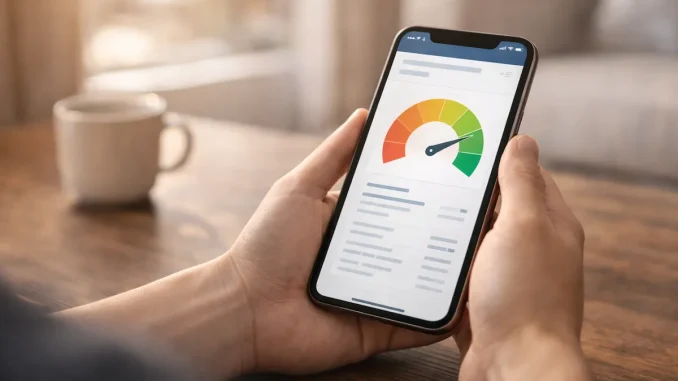
One of the most persistent myths in the world of personal finance is the belief that simply looking at your credit score will cause it to drop. This misconception often prevents people from staying on top of their financial health, leading them to avoid the very tools designed to help them. If you have ever hesitated to open your banking app or a credit monitoring service for fear of “losing points,” you are not alone—but you are misinformed.
The short and definitive answer is: No, checking your own credit score does not hurt it. In the eyes of credit bureaus, there is a massive distinction between you monitoring your progress and a lender evaluating you for a new loan. While the latter can sometimes cause a temporary dip, the former is considered a healthy financial habit that carries zero penalty.
In this article, we will explain why self-checks are safe, the mechanics of “soft inquiries,” and why regular monitoring is actually one of the best ways to protect your long-term score. To get a broader view of how these inquiries fit into the larger lending system, make sure to read our comprehensive guide on Credit Checks Explained: How They Work and Why They Matter.
The Science of the Soft Inquiry
To understand why checking your own score is harmless, you first need to understand the concept of a soft inquiry. Credit bureaus categorize every request for your data. When you check your own score—whether through a credit card issuer’s app, a free monitoring service, or by requesting your official report—the bureau labels this as a “soft pull.”
Soft inquiries are not shared with potential lenders and are never factored into credit scoring models like FICO or VantageScore. Essentially, you are simply viewing your own data, which is your legal right. Because you aren’t seeking new debt, there is no increased risk to your profile, and therefore, your score remains untouched. You could check your score ten times a day, and it would not change by a single point.
Why the Myth Exists
The confusion usually stems from a misunderstanding of hard inquiries. These occur when you authorize a lender to check your credit for a specific application—like a car loan, mortgage, or a new credit card. Because a hard inquiry indicates that you are potentially about to take on new debt, it can cause a small, temporary drop in your score.
People often conflate these two types of checks. They assume that if a bank checking their score causes a dip, then they must be careful about looking at it themselves. As we detail in our guide on Hard vs Soft Credit Checks: What’s the Difference?, these two events are treated completely differently by the credit system.
The Hidden Dangers of Not Checking Your Credit
While people fear that checking their credit will hurt them, the real danger lies in not checking it. Your credit report is maintained by human data entry and automated systems, both of which are prone to errors. According to various studies, a significant percentage of credit reports contain mistakes—ranging from misspelled names to accounts that don’t belong to the consumer.
By monitoring your score regularly, you can:
- Spot Identity Theft Early: If you see a sudden drop in your score or a new account you didn’t open, you can freeze your credit immediately.
- Identify Reporting Errors: You can catch incorrect balances or late payments that were actually paid on time.
- Track Your Progress: Seeing your score rise as you pay down debt provides the motivation needed to stay on track.
Where to Safely Check Your Score
In the past, getting your credit score often required paying a fee. Today, you have numerous free and safe options that use soft inquiries. Most major credit card issuers and banks provide a free “Credit Dashboard” updated monthly or even weekly. Additionally, websites like AnnualCreditReport.com allow you to download your full, detailed report from all three bureaus for free once a week (a policy extended post-pandemic).
Using these official and reputable sources ensures that your data is protected and that your check remains “soft.” For more on the rules surrounding who else can access this data, see our article on Who Can Run a Credit Check on You?.
Monitoring Is Your Best Defense
The fear that checking your own credit score will cause it to drop is a myth that needs to be retired. As we have established, self-checks are categorized as soft inquiries, which have zero impact on your score. In fact, being proactive about your credit is one of the most responsible financial steps you can take. It allows you to catch errors, monitor your growth, and protect yourself from the rising threat of identity theft.
Instead of avoiding your credit report, you should embrace it as a vital health check for your financial life. By regularly visiting reputable monitoring sites or using your bank’s built-in tools, you stay informed without any penalty. For a deeper understanding of the different types of checks and how they influence your borrowing power, refer back to our foundational guide on Credit Checks Explained: How They Work and Why They Matter.
Frequently Asked Questions About Checking Your Credit
Will my credit score drop if I check it every day?
No. You can check your credit score as often as you like—daily, weekly, or monthly—without losing a single point. These are considered soft inquiries, which are not visible to lenders and do not factor into your credit score calculation.
What is the difference between a self-check and a lender check?
A self-check is a soft inquiry, which means you are simply viewing your own data. A lender check (for a credit application) is usually a hard inquiry. Hard inquiries indicate you are seeking new debt, which is why they can cause a small, temporary dip in your score.
Can I check my credit report for free without hurting my score?
Yes. You can visit AnnualCreditReport.com to get a free copy of your credit report from all three major bureaus. Many banks and credit card companies also offer free credit score monitoring through their mobile apps, all of which are safe and won’t hurt your score.
Why did my score change after I checked it?
If your score changed right after you checked it, the change was caused by other factors, not the act of checking. This could include a change in your credit card balance, a recently reported payment, or an old account falling off your report. The timing was likely a coincidence.
Are third-party credit monitoring apps safe to use?
Reputable third-party apps are generally safe and use soft inquiries to provide your score. However, always ensure you are using a well-known, secure service. Checking through your official bank app is often the most direct and secure way to monitor your score.
Be the first to comment